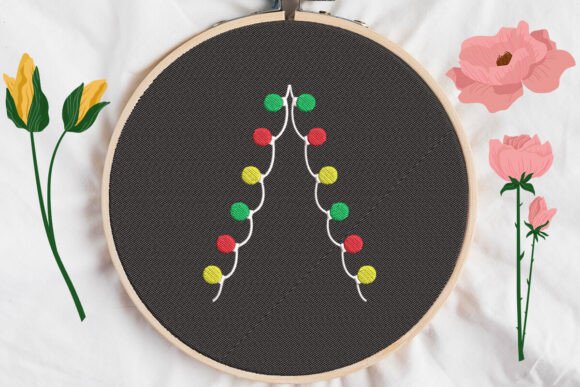
Christmas Lights Embroidery Review
As a designer who spends more time staring at stitch density charts and fabric swatches than watching holiday movies, I approach every new machine embroidery design with a healthy dose of skepticism. The market is saturated with generic clipart converted into digitized files, and too often, what looks charming on a screen falls apart under the needle. However, when I first pulled up the Christmas Lights Embroidery file to test for an upcoming seasonal collection, I was immediately struck by its potential. This isn’t just another festive icon; it feels like a thoughtfully constructed piece that understands the nuances of thread and tension.
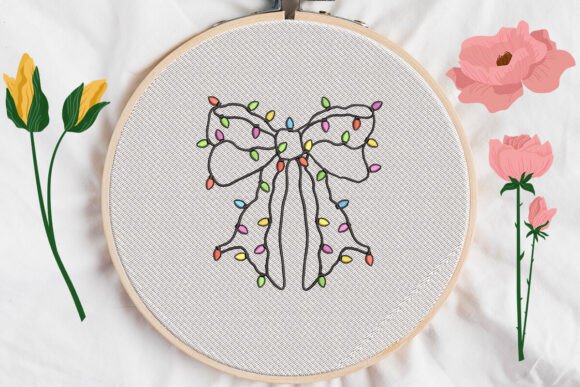
The primary appeal of this design lies in its mood. It captures the cozy, nostalgic essence of the holidays without being overly cluttered. For small business owners and Etsy sellers looking to expand their holiday embroidery offerings, visual clarity is everything. This design delivers that clarity. The arrangement of the lights suggests a string or a garland, providing a natural flow that works beautifully on curved surfaces or as a border element. It creates an instant sense of warmth, which is exactly what buyers are seeking when they purchase personalized gifts or boutique home decor items during the peak season.
Real-World Application: From Screen to Stitch
To truly evaluate any embroidery file, you have to imagine it on a physical product. My immediate thought process went to custom apparel and home goods. Specifically, I visualized this design on a heavy cotton canvas tote bag. The contrast of bright, varied thread colors against a neutral or dark fabric would pop significantly. For a tote bag design, this offers a versatile aesthetic that appeals to a broad demographic, from students to professionals looking for a festive accessory.
I also considered its application on knit fabrics, such as sweatshirts or hoodies. Sweatshirt embroidery requires a design that can handle the stretch and texture of jersey or fleece without distorting. The layout of these Christmas lights appears balanced enough to withstand the manipulation of the hoop while maintaining its shape after washing. It adds a touch of personality to a basic garment, transforming a mass-produced item into a unique, handmade product. Similarly, for baby clothes or nursery decor, the soft, glowing implication of the lights provides a gentle, magical theme suitable for infants and toddlers.
Beyond apparel, this design has strong potential for hard goods. Imagine it stitched onto a linen pillow cover or a kitchen tea towel. In these contexts, the design acts as a focal point. For craft fair products, having a recognizable and cheerful motif like this can drive impulse buys. Customers gravitate toward items that feel festive yet elegant, and this design strikes that balance. It is not loud or chaotic; it is inviting. This makes it an excellent choice for commercial embroidery projects where brand consistency and professional presentation are key to building customer trust.
Design Analysis and Visual Personality
From a technical standpoint, the visual personality of this digital embroidery file is distinct. It relies on a mix of stitch types to create depth. Typically, designs of this nature utilize satin stitches for the outlines of the bulbs to give them definition, while fill stitches might be used for the connecting wire or background elements to provide texture. Running stitches could be employed for finer details, such as the filament inside the bulb or the hanging hooks.
The color palette is crucial here. A successful thread colors selection will enhance the "glow" effect. Designers should look for gradients or high-contrast combinations—perhaps warm yellows and oranges against cool blues and greens—to mimic the variety found in real holiday lighting. When reviewing the design assets, ensure that the color separation allows for smooth transitions. If the design uses too many solid blocks of color without blending, it may look flat. The best versions of this design use overlapping threads or strategic placement to simulate light emission.
This versatility extends to its use as an applique design component as well. While primarily a stitch-based pattern, it could serve as a guide for appliqué work, where felt or fabric shapes are cut and then outlined with satin stitching. This adds another layer of dimension, making the finished product feel even more premium and tactile. For digital product sellers, creating mockups that show both the flat design and the textured result can help buyers visualize the final outcome, increasing engagement and conversion rates.
Practical Considerations for Production
While the artistic merit of the Christmas Lights Embroidery design is clear, practical execution requires careful planning. Not all fabrics are created equal, and certain materials will challenge the integrity of the stitching. I strongly advise testing this design on scrap fabric before committing to your final product. This is non-negotiable for any serious crafter or maker.
Pay close attention to the stitch density. If the design is too dense, it may become stiff and uncomfortable, particularly on wearable items like t-shirts or baby onesies. Conversely, if it is too sparse, it may lack the visual impact needed to justify the price point. Check the hoop size requirements to ensure the design fits comfortably within your machine’s capabilities without requiring excessive re-hooping, which can lead to misalignment.
Fabric texture plays a significant role in the final appearance. On highly textured fabrics, such as chunky knits or rough burlap, fine details may get lost. In these cases, simplifying the design or using larger stitches might be necessary. On the other hand, smooth fabrics like cotton twill or polyester blends will render the finest details crisply. Be cautious with stretchy fabrics; without proper stabilizer support, the tension of the threads can pucker the material, ruining the professional look of the handmade product.
Another critical factor is the background color. Light-colored threads may not show up well on white or pastel fabrics, while dark threads can disappear on black backgrounds. Always compare the design in black and white mockups to check for contrast issues. Using a proper stabilizer is essential to prevent shifting and to support the fabric during the stitching process. This is especially important for complex designs with multiple color changes.
Where to Use (and Where to Pause)
There are specific scenarios where this design might not perform optimally. Avoid using it on very small hoop sizes unless the detail level is minimal. Tiny lettering or intricate corners can become muddy if the stitches are too close together. Similarly, on curved surfaces like caps or hats, ensure the design has enough flexibility to conform to the shape without bunching up. Products that require frequent washing, such as dish towels or aprons, need robust stitching that won’t fray or fade quickly. Inspect the design for loose ends or weak anchor points that might unravel over time.
For custom apparel and personalized gift markets, this design shines. It adds value to simple items, turning a plain mug or blanket into a special keepsake. However, always confirm licensing terms before selling finished items or digital products. Some designs are restricted to personal use only, which can limit your revenue streams. Ensure you have the right permissions to incorporate this commercial embroidery asset into your business inventory.
In conclusion, the Christmas Lights Embroidery design is a strong candidate for seasonal collections. It offers a blend of aesthetic charm and technical feasibility that appeals to both designers and end-users. By paying attention to fabric choice, stabilizer usage, and color contrast, you can leverage this design to create high-quality, desirable products. Whether you are an Etsy seller, a boutique owner, or a hobbyist making gifts for friends, this design provides a reliable foundation for creating memorable, festive creations. Test it thoroughly, trust your eye, and let the magic of the season shine through your needlework.