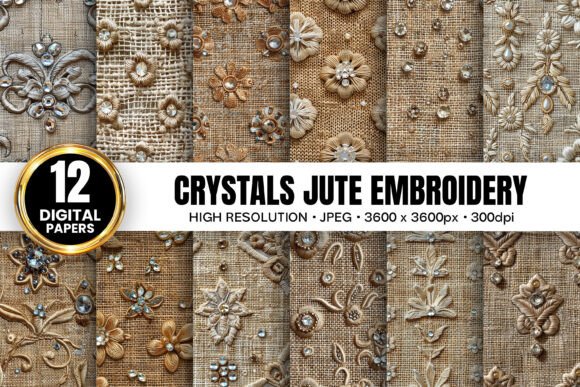
Crystals Jute Embroidery Digital Papers Review
As an embroidery designer who spends weekends navigating the chaos of craft fairs and handmade markets, I have learned one hard truth: your booth display must speak before you do. Customers walk past dozens of tables in seconds. If a product looks generic or poorly executed, they keep walking. This is why I am always on the hunt for design assets that offer immediate visual impact, texture, and a sense of premium quality without requiring hours of complex stitching that drives up production costs. Recently, I came across Crystals Jute Embroidery Digital Papers, a set of digital graphics categorized under Patterns and Graphics. While these are technically digital files rather than direct machine embroidery files, their potential as foundational assets for creating high-value embroidered products is significant. In this review, I will break down how these designs can transform your craft fair product lineup, from tote bags to apron embroidery, and what you need to consider before committing them to fabric.
First Impressions: The Visual Appeal of Crystals Jute Embroidery Digital Papers
When you first open the ZIP file containing Crystals Jute Embroidery Digital Papers, the immediate takeaway is texture. The title suggests a fusion of rustic natural fibers (jute) with sparkling elements (crystals). For a maker targeting the farmhouse, modern rustic, or boutique aesthetic, this combination is potent. The 300 DPI resolution ensures that even if you zoom in to inspect the details, the image remains crisp. This clarity is vital because it allows you to see exactly how the "jute" weave interacts with the "crystal" accents.
The aesthetic feels grounded yet elevated. It is not overly cute or childish; instead, it leans toward a sophisticated, tactile look that photographs beautifully. In the world of Etsy seller listings and physical booth displays, photogenicity is currency. These digital papers provide a strong visual anchor that suggests durability and style simultaneously. They feel like a small shop product that could easily sit alongside higher-end boutique items without looking out of place.
Application on Key Craft Fair Products
So, where does Crystals Jute Embroidery Digital Papers shine? Let’s look at specific handmade product categories commonly sold at weekend markets.
Tote Bags and Market Bags
A plain canvas tote bag is a commodity. A tote bag featuring a design inspired by the textures in Crystals Jute Embroidery Digital Papers is a statement piece. You can use these digital images as reference points for creating a custom tote bag design. Imagine embroidering a jute-textured background with crystal-like beadwork or metallic thread accents. The contrast between the rough jute look and the smooth, shiny crystals creates a focal point that draws the eye. This works exceptionally well for grocery totes, library bags, and everyday market bags.
Aprons and Kitchen Towels
In the kitchen category, apron embroidery and tea towel embroidery are staples. The jute theme evokes a sense of home cooking and rustic charm. By translating the digital paper’s pattern into an embroidery layout, you can create a border or a central motif that adds warmth to any kitchen. The key here is repetition. Because the digital papers are part of a set, you can create a cohesive collection of matching kitchen linens that look professionally curated.
Embroidered Patches and Caps
For accessories, the scale matters. The intricate details in Crystals Jute Embroidery Digital Papers might be too small for a tiny patch unless simplified. However, if used as a large focal design on a cap or a substantial embroidered patch attached to a denim jacket or backpack, the texture becomes a feature rather than a detail. The "crystal" aspect lends itself well to using different thread sheens or adding actual sequins during the finishing process, elevating a standard cap into a fashion item.
Pillow Covers and Home Decor
Home decor items sell well at craft fairs because they allow customers to visualize the product in their own homes. Using the digital papers as inspiration for pillow covers allows you to mix fabrics. You might stitch a jute-textured section onto a linen pillow cover, using the digital guide to ensure the placement of decorative elements aligns perfectly. This approach increases the perceived value of the finished product.
Practical Production and Selling Considerations
While the digital files are excellent references, turning them into tangible goods requires careful planning. Here are some practical notes for the embroidery designer.
- Thread Contrast and Fabric Texture: The success of a jute-inspired design relies heavily on thread choice. You cannot simply print the digital image; you must interpret it. Use earthy tones like ochre, tan, and brown for the jute elements, and perhaps silver, white, or iridescent threads for the "crystals." Test these combinations on scrap fabric to ensure the thread colors pop against your base fabric.
- Stitch Density and Hoop Size: Before starting production, check the stitch density required to replicate the texture. Dense stitches can pucker lightweight fabrics like tea towels. Ensure your hoop size accommodates the full design without awkward re-hooping. If the design is large, consider dividing it into sections or using a larger hoop frame.
- Stabilizer Selection: The type of stabilizer you choose will affect the final look. For jute textures, a cut-away stabilizer is often best to prevent distortion over time, especially on stretchy fabrics like caps or jersey blends. For stable fabrics like cotton canvas, a tear-away might suffice for lighter designs.
- Batch Production: One of the biggest advantages of using digital assets like Crystals Jute Embroidery Digital Papers is repeatability. Once you perfect the digitizing process or the manual embellishment technique, you can produce batches efficiently. This consistency is crucial for maintaining brand integrity across multiple sales events.
Photography and Online Marketing
Even the best commercial embroidery product fails if it doesn’t photograph well. The unique textures in Crystals Jute Embroidery Digital Papers lend themselves to close-up photography. When creating a printable mockup or shooting real samples, focus on macro shots that highlight the interplay between the "jute" and "crystal" elements. Show the texture. Show the depth. This level of detail reassures online buyers that the product is high-quality and justifies the price point.
Furthermore, these designs work beautifully as design assets for your marketing materials. Use the digital papers to create banners for your booth, tags for your products, or backgrounds for your social media posts. Consistency in your visual branding helps customers recognize your work instantly.
Careful-Use Notes and Final Verdict
There are caveats to keep in mind. Tiny details in the digital paper may get lost if you scale the design down too much. Avoid attempting to embroider minute text or very fine lines unless you have a high-density machine and skilled digitizing skills. Also, be mindful of the fabric you choose; dark fabrics might hide the subtle variations in the jute texture, so stick to light or neutral bases unless you are using bright, contrasting threads.
Finally, always confirm commercial licensing before selling finished products made from these designs. While the digital papers are provided in a convenient ZIP file, understanding the usage rights protects your business. If you plan to use these as direct references for original embroidery files, you generally have more flexibility than if you were printing the image directly onto fabric.
In conclusion, Crystals Jute Embroidery Digital Papers is a versatile resource for the creative entrepreneur. It offers a compelling aesthetic that bridges rustic charm and modern elegance. By thoughtfully interpreting these digital patterns through embroidery, you can create standout cricut and embroidery crafters favorites that drive sales at your next craft fair. Whether you are updating your Etsy shop or refreshing your booth inventory, these designs provide a strong foundation for building a cohesive, attractive, and profitable product line.